
Contemplating: Crash (1996)
Cars and death occupy the sexiest imagining of Toronto highways

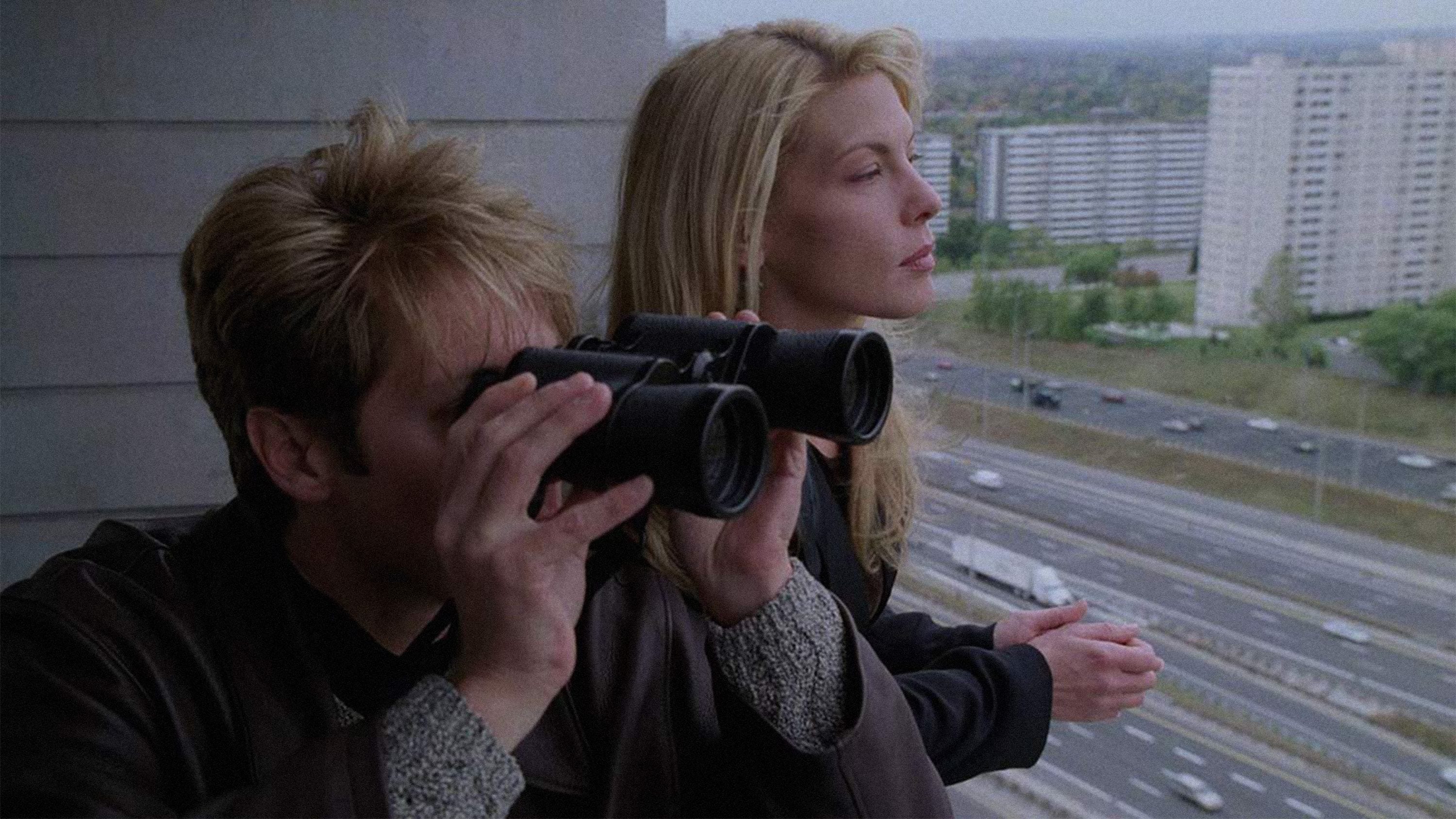
The French phrase "la petite mort," translated as "the little death," is defined as "a post-orgasm sensation as likened to death." This idea originated from medieval times when physicians believed that sex drained the “life force” from the body, and having too much of it would result in death. David Cronenberg’s film Crash (1996) is in conversation with the relationship between sex and death when focusing on the psycho-sexual stimuli brought about by a collision of man with modern technology made out of steel.
In the film’s opening moments, married couple James and Catherine recall their sexual experiences with different partners earlier in the day. Catherine happens to find her way into a seemingly empty plane hanger, rubbing her breast against an engine, teasing the couple’s eventual fascination with vehicles, as a man presses himself behind her. James, who is some sort of film director, is found with his face buried in behind one of his camera technicians in a backroom on set. The estranged couple ask each other if they had come. When it is revealed that neither one of them climaxed, Catherine reassures them both by saying "Maybe the next one," as James penetrates her from behind on their apartment balcony and the camera pushes in on the Toronto 401 highway.
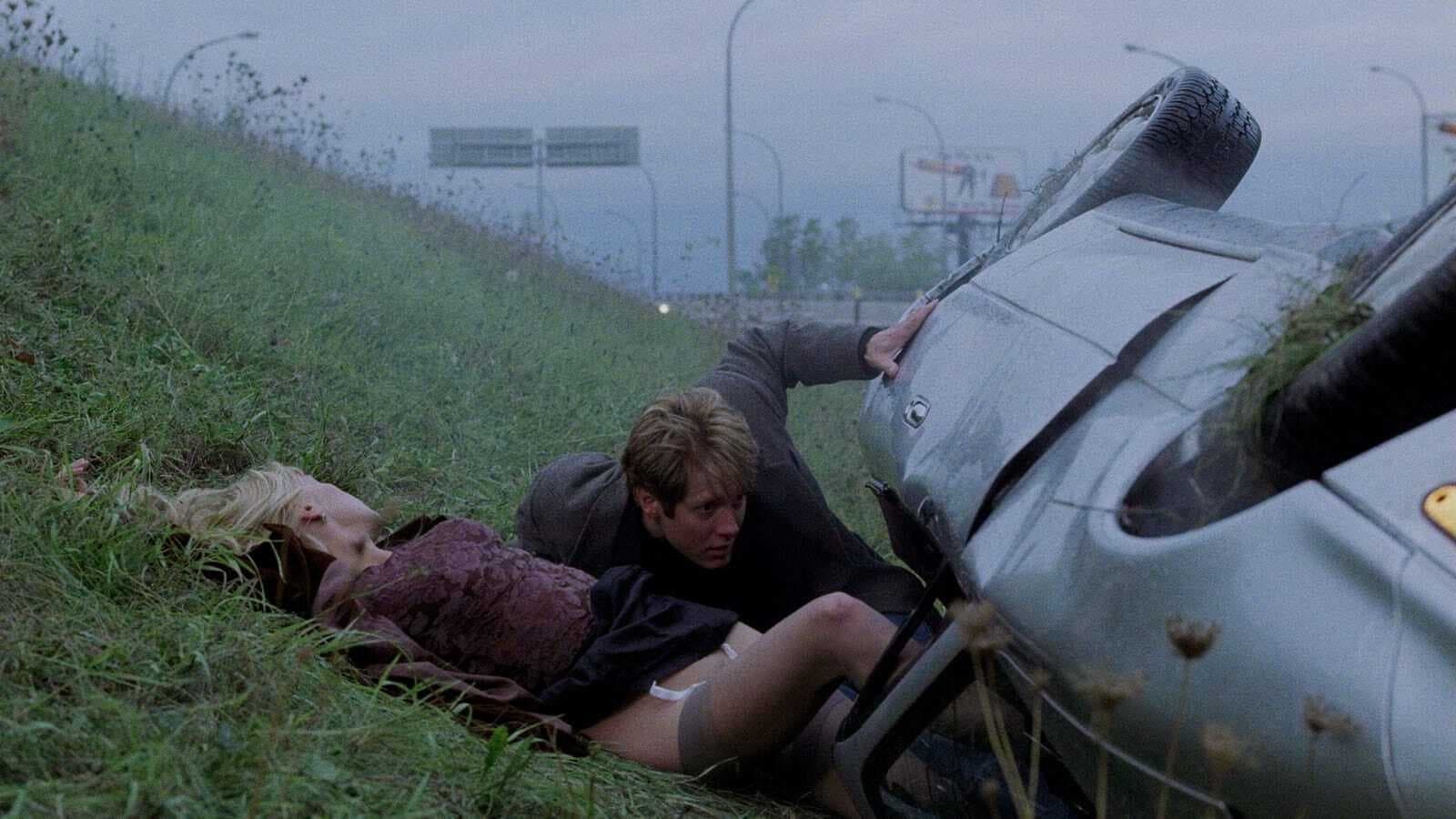
This moment is juxtaposed with the final scene when James attempts to inflict "the little death" upon Catherine by ramming her car off the road. James pulls her out of the wrecked vehicle, while euphorically inhaling the steam. Catherine survives the crash, skirt raised, panties exposed, depriving her of the sexual release and the psycho-sexual martyrdom she would have left behind. It is James this time who reassures her, "Maybe the next one, darling."
Through this psychological relationship of stimuli, the orgasm is likened to death. Vaughan is the mastermind of what he calls "his project." He orchestrates car crashes both as a point of reenactment and a sort of cultish initiation. His followers are led to believe that the collection of cars on a highway is not a simple commute, but rather a "gathering for a special reason." There is a collective repressed sexual desire for the car crash. An action that possesses an intensity impossible in any other form.
The cold brutalist concrete that surrounds our characters serves as a setting that perpetuates this repressed sexuality. In many ways, Toronto, especially in the mid-90s is very un-sexy. At the film’s Cannes press conference, Toronto critic Brian D. Johnson thanked director David Cronenberg for “making our city look better on screen than it ever has been before.” The city has not left its cultural mark at this time. What they had, and the only thing James could see from his balcony, was cars, the highway, and the closing distance of hood and bumper as if it were a strip tease.
At the same press conference, Cronenberg was asked about the possibility of audiences watching Crash at a drive-in theatre. He responded with an insightful theory on the cultural connection between cinema and the car. "The car and cinema are both about 100 years old. They both represented the liberation of sexuality and previously unimagined freedom, compressing our idea of time, space, and our reality."
Vaughan in the film shepherds followers who view sexuality as something that is not simply biological, but its own sort of energy that is transferrable and can be utilized to perpetuate myth-spinning and legacy. When he is presenting a reenactment of James Dean’s “historic” 1955 car crash, he says “It was a moment that would create a Hollywood legend.” He sees himself as a prophet, someone who can spur sexual creativity and inspire future generations to further bend and broaden the confines of sexuality. Cronenberg says, “Sexuality is a human invention, we don’t need sex to create babies… sexuality now is something completely different, it can become an art form or a form of technology.”
It is no surprise that when humankind takes two man-made technologies such as vehicles and sexuality, it would inevitably lead to death, the most intense of stimuli. Humans typically want to play god and control death for fear of the inevitable. This endgame is achieved in Crash when the car becomes a phallic object, an extension of the self, to orchestrate sexual pleasure.
Although Vaughan’s group of misfits are exploring a new iteration of sexuality, it hardly seems liberating. When James has multiple sexual encounters in a car he is always stone-faced, his attention less on the sexual partner in front of him and instead on some distant hopeless future. The muted feeling could be because this cult is all lusting for a gruesome death with automotive parts being cast about, but there is also a feeling that the fascination with machines could be fazed out in the future. As we are now in a digital era, what we find online is much more evocative and “fitting” of sexual stimulation, something Cronenberg speaks to three years later in eXistenZ (1999). Crash captures a moment for physical machines and enthusiasts. In a vacuum, those within the cult believe they are the cutting edge, but they end up becoming a retrospective, upgraded for the new stimuli.